Introduction
Companies are racing to integrate artificial intelligence. In fact, 95% of customer interactions are projected to be AI-powered. However, a powerful algorithm is not a product. Without a strong AI and UX focus, these tools fail. True value is unlocked only when human-centered AI design is used to build trust and ensure usability.
The ‘Black Box’ Problem: Why AI Needs a Better Interface
Many AI tools act like a “black box.” Users input data and receive an output. The reasoning is often hidden. This ambiguity creates friction and mistrust.
Good AI and UX design provides clarity. It makes complex processes understandable. This transparency is essential for user adoption. The interface is the bridge between human intent and machine logic.
Building Trust in AI: The Role of UX
Trust is not given; it is earned. This is especially true for AI. Users fear a loss of control or biased results. Human-centered AI principles are used to build trust. This is achieved through clear, predictable design.
A trustworthy interface must:
- Explain its reasoning: Provide simple explanations for why it suggests an action.
- Show its sources: Link to the data or documents used to generate a response.
- Communicate uncertainty: Use phrases like “I am 80% confident…” instead of stating opinions as facts.
- Make correction easy: Offer a clear way to edit or reject the AI’s output.
These elements, central to human-centered design, transform a “smart” tool into a “reliable” one.
From ‘Capability’ to ‘Usability’: Making AI Actionable
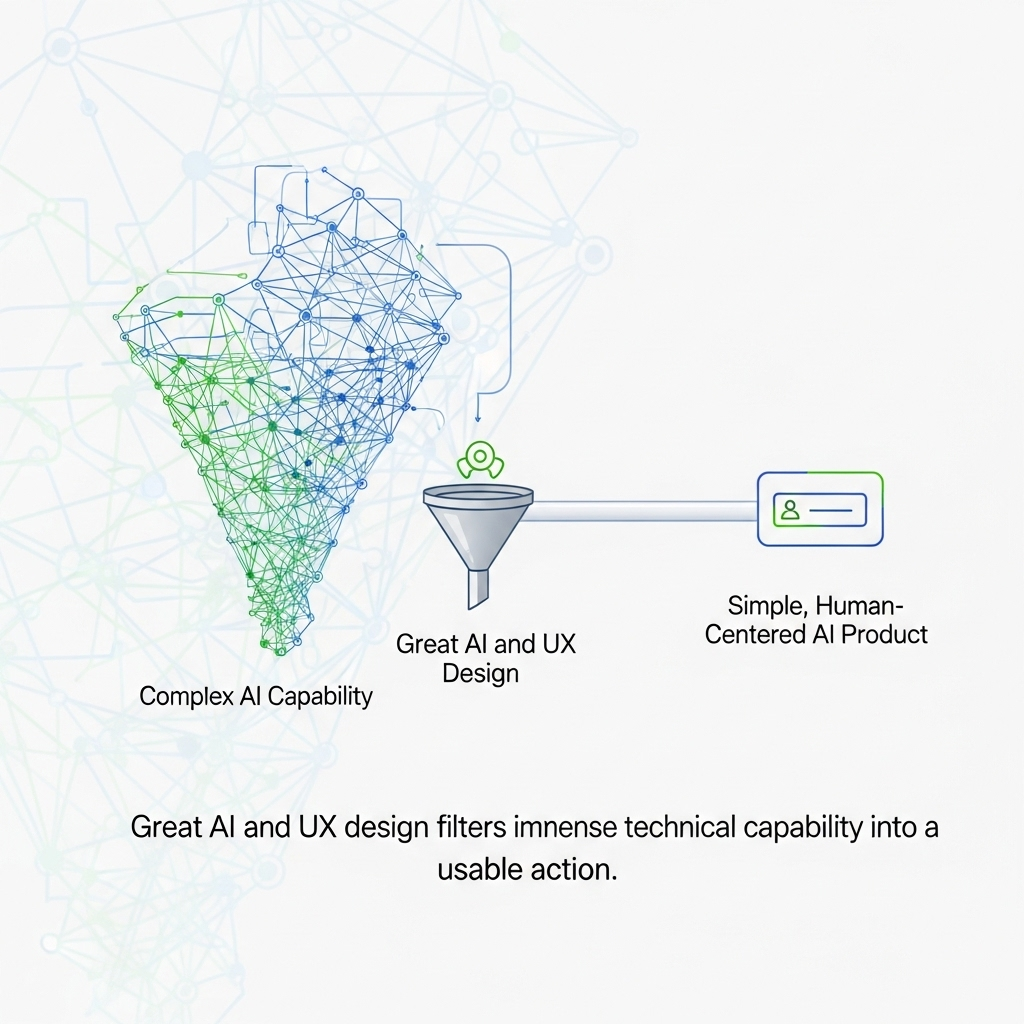
A common mistake is “feature dumping.” Teams showcase the AI’s raw power. This overwhelms the user. A human-centered approach is different.
It starts with the user’s goal. The design then curates the AI’s power to solve that specific problem. The focus shifts from capability to usability. This makes the AI product actionable. It provides the right information at the right time.
Designing for Errors and “Wrong” Answers
Artificial intelligence is not perfect. It will make mistakes. A robust UX strategy (Internal Link) plans for this. The interface must provide a “graceful exit.”
Users need simple ways to correct the AI. They must be able to report errors. Offering a “human-in-the-loop” option is also vital. This builds resilience. It shows users they are still in control.
A recent Pega study found that 70% of users want to know how an AI-powered system makes its decisions. Transparency is no longer optional; it is a core component of UX.”
The Human-in-the-Loop: AI as a Co-pilot, Not a Pilot
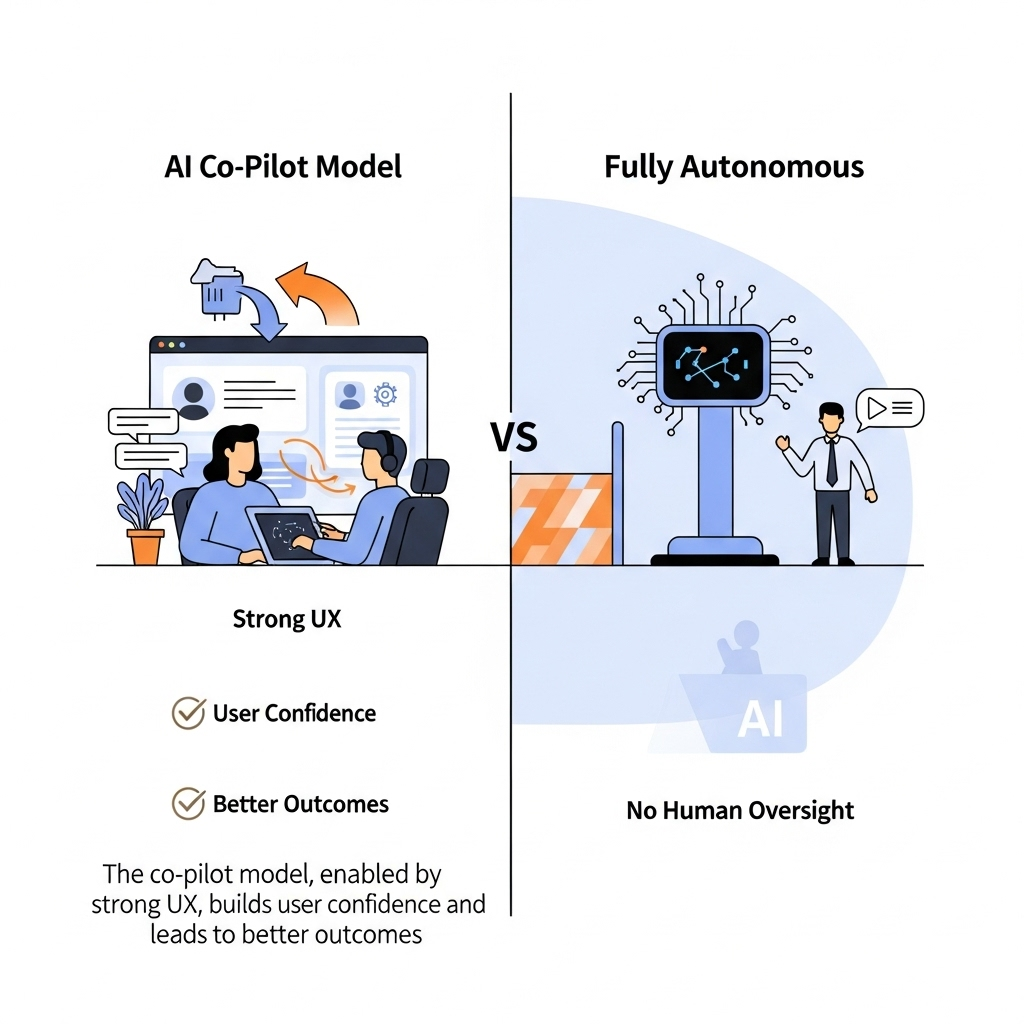
The “co-pilot” model is the future of human-centered AI. The AI suggests and automates. The human reviews and confirms.
This approach is powerful. It leverages AI’s speed with human judgment. The user interface design (Internal Link) is critical. It must facilitate this partnership. Clear calls-to-action for approval or rejection are needed. This creates a seamless workflow.
Case Example: Sociazy’s AI-Powered Analytics
At Sociazy, we are developing an AI-powered analytics module (Internal Link). The AI can identify complex user behavior patterns. Early prototypes just showed the data. Our partners found it “interesting but not actionable.”
We applied a human-centered AI approach. The interface was redesigned. It now presents a “Key Insight” in plain English. For example: “We noticed a 30% user drop-off at the payment step.” It then offers three “Suggested Actions” based on the data. The user remains the decision-maker. This design shifted the tool from a data report to a strategic co-pilot.
How Good UX Drives AI Product Adoption
Ultimately, AI product adoption is the goal. A brilliant AI model with poor UX will have zero users. It will deliver no ROI.
A good UX creates a positive feedback loop. Users trust the tool. They use it more often. This generates more data. The AI then becomes even smarter. This virtuous cycle is impossible without a strong AI and UX foundation.
Conclusion: Your “Golden Takeaway”
The race for AI dominance is distracting. Leaders are focused on algorithms. Smart leaders are focused on adoption. Your AI technology is not the product. The experience of using it is.
The “golden takeaway” is this: Human-centered AI is the only way to build trust. Trust is the only path to adoption.
Build AI That Users Actually Trust
Sociazy’s design and engineering teams specialize in creating human-centered AI interfaces that drive adoption and deliver real business value.