
Why AI Integration is Now Critical
Legacy ERP systems anchor many Heavy Manufacturing businesses. They manage essential transactional data every day. However, they lack modern predictive capabilities. This creates a significant intelligence gap. Most manufacturers will boost their AI budgets soon. Their static foundational systems cannot keep pace.
A full system replacement is usually too slow and expensive. Strategic AI ERP Integration is the answer. You must transform your old ERP into an intelligent system. This move is a major competitive necessity. Let us review the technical blueprint for this transformation.
Step 1: Auditing and Preparing Your Core Data
AI models demand high-quality, reliable data. Data integrity is the main hurdle for any integrate AI into ERP system project. Your legacy ERP data may be inconsistent or segmented.
Prepare the Foundation
- Identify Key Data: Determine the ERP modules with high-value data. Focus on inventory, logs, and production schedules.
- Clean and Standardize: Use automated tools to correct errors quickly. All data needs a consistent, standard format.
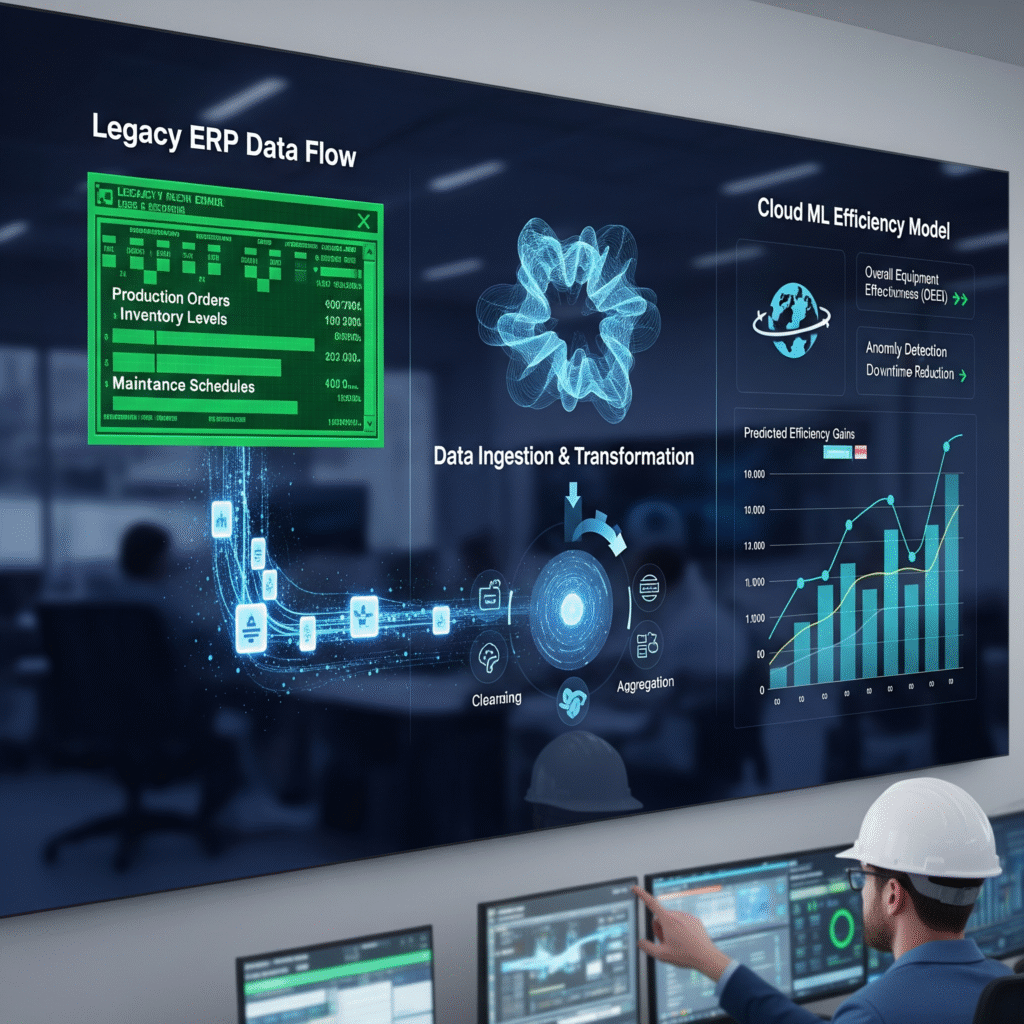
- Build a Unified Data Layer: Create a data warehouse outside the core ERP. This centralizes clean data from the ERP and external sensors. The ERP remains the reliable System of Record. The new layer becomes the powerful System of Intelligence.
Do not attempt to fix data within the old ERP structure. Use modern pipelines to extract and load data into a clean, separate environment. This approach secures your mission-critical systems.”
— Sociazy Chief Technology Officer (CTO)
Step 2: Selecting the Optimal Integration Architecture
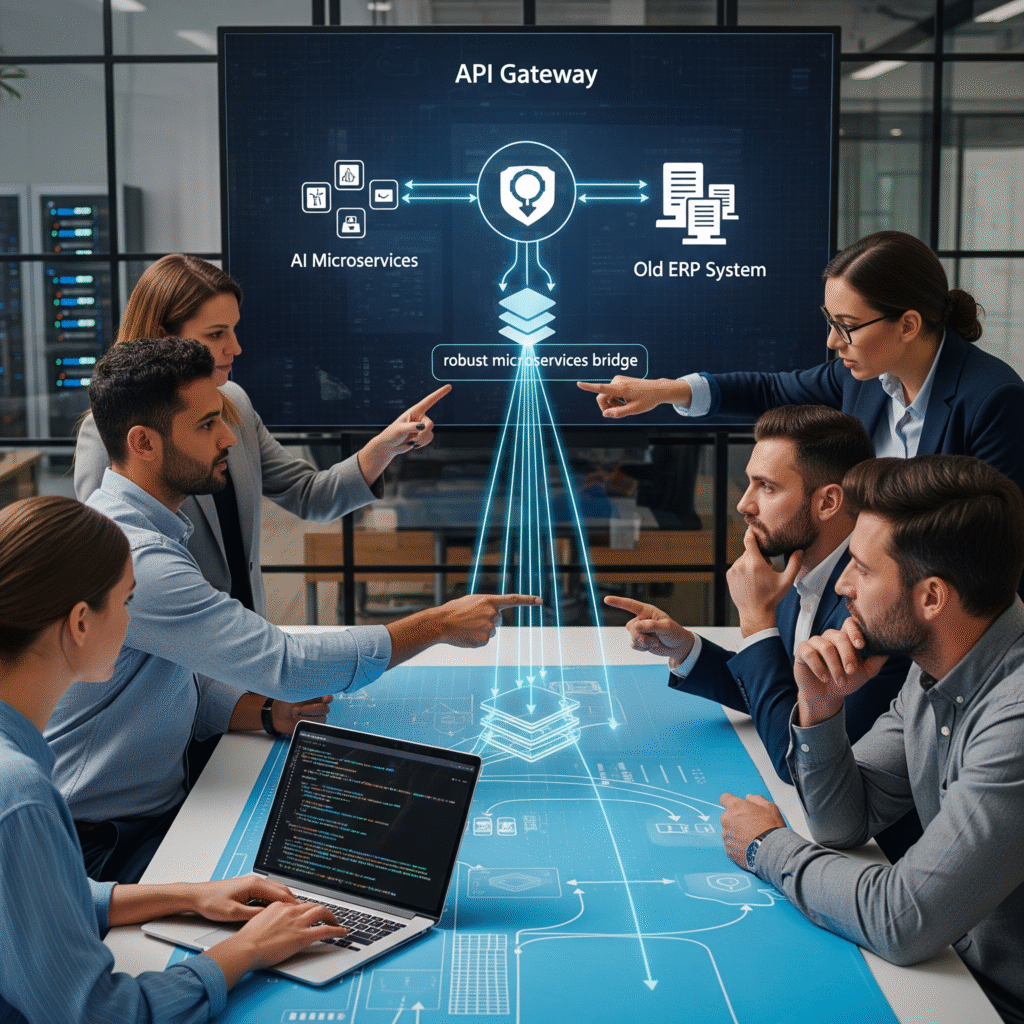
Older ERPs often lack the native APIs that AI tools require. This technical gap is a huge challenge. Your integration plan must be non-disruptive and highly modular.
Top Integration Methods
| Method | Description | Ideal Use Case |
| Microservices and APIs | Build custom, small interfaces to pull specific data points. | Real-time data synchronization, high-volume transactions. |
| Middleware Platforms | Use iPaaS solutions as a necessary bridge for data flow. | Complex data mapping, various source systems. |
| RPA with AI | Bots extract data by mimicking human input in the ERP screen. | Systems without available APIs, low-volume, repetitive work. |
A combination of robust APIs and strong middleware is best for most clients. This ensures smooth communication between the old system and the new AI engine. This architecture is key to successful AI ERP Integration.
Step 3: Focusing on High-Impact AI Use Cases
Do not deploy AI across your entire organization at once. Target small projects that deliver fast, measurable ROI. These early successes will validate the project.
Predictive Maintenance (P-Maint)
P-Maint uses Machine Learning (ML) on past ERP maintenance records. It combines this with live IoT sensor data from the shop floor. The system predicts equipment failure before it occurs. This strategic action can cut unexpected downtime significantly.
Smarter Demand Forecasting
Standard ERP forecasts are often too limited. AI uses a broader data set than older models. It analyzes market trends, supplier performance, and customer sentiment. This results in far more accurate, data-driven predictions.
Real-world Example/Case:
A major construction equipment manufacturer partnered with Sociazy. They applied ML to their decades-old ERP records. They focused on optimizing the inventory of high-cost spare parts. The successful AI ERP Integration lowered inventory holding costs by 25% in the first year.
$$\text{ROI} = \frac{\text{Efficiency Gains} \times \text{Asset Uptime}}{\text{Cost of Integration}}$$
Step 4: Phased Deployment and Outcome Validation
Launching the whole solution at once is too risky. Implement your new AI solution using small, controlled phases. Start with a focused, non-critical pilot.
Deployment Checklist
- Pilot Deployment: Run the AI model in a single, defined area or production line.
- Shadow Mode: Operate the new AI system alongside the existing process. This phase should last 30–60 days.
- Validate Outcomes: Compare the AI’s predictions against the actual production results. Ensure accuracy is high.
- Scale Up: Only expand the solution broadly after the results are fully validated.
Current/Evergreen Statistic: Studies show organizations using AI in their ERP processes realize a 40% reduction in manual process handling time.
Avoiding Common Integration Pitfalls
Some common errors derail IT Consulting & Digital Transformation efforts. You must identify and address them early.
- Internal Skill Gaps: Your internal team may lack specific ML or data engineering skills. Partnering with a specialist is often the best strategic choice.
- Staff Resistance: Employees naturally resist new, complex tools. Provide clear communication and thorough training. Show how the AI helps them make better decisions.
- Neglecting Security: A new data layer means new entry points. Implement strong security protocols immediately. This includes full data encryption and strict access controls.
Conclusion: The Time for ERP Augmentation is Now
You do not have to discard your reliable legacy ERP. It remains the source of truth for your business. The best path to modernization is strategic augmentation. By implementing an AI ERP Integration strategy now, you gain critical predictive power. This lets your Heavy Manufacturing company move from reactive to proactive. Achieve greater agility, higher efficiency, and sustained profitability today.
Ready to Transform Your Heavy Manufacturing Strategy?
Stop wondering and start transforming. Contact Sociazy’s expert team today for a no-obligation consultation on how we can solve your specific Heavy Manufacturing challenges. Book Your Free Consultation