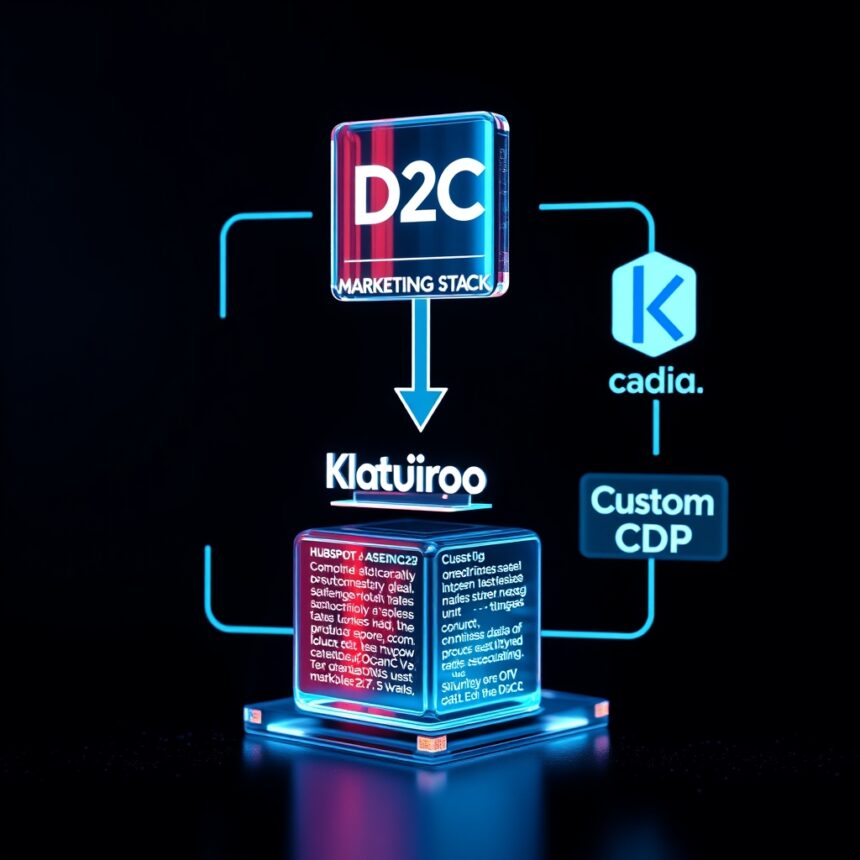
D2C Marketing Stack Decoded: HubSpot, Klaviyo, or Sociazy True Profit Cockpit
A D2C marketing stack integrates technologies. It helps with customer acquisition, engagement, and retention. It centralizes data, automates campaigns, and personalizes experiences. This happens across the customer journey. This optimizes every touchpoint for growth and profitability in competitive D2C markets.
Data unification and deeply personalized customer journeys are non-negotiable for D2C brands to thrive today.
— Sarah Miller, D2C Strategy Lead
Let’s talk shop.
We all run D2C businesses. However, the ground beneath us shifts. Execs in the US, Australia, and Canada face similar growth goals. Your market realities remain distinct.
US D2C is hyper-competitive and data-rich. Rising ad costs are a constant headache. Australia and Canada often grapple with stricter privacy laws. This makes effective targeting harder. Your tech stack cannot be a one-size-fits-all solution.
Picking the right marketing stack is not just about features. It is about fitting your specific market. It also fits your growth stage and your customer. We discuss HubSpot, Klaviyo, or a Sociazy True Profit Cockpit. Let’s break them down now.
The Stack Showdown: HubSpot vs. Klaviyo vs. Sociazy True Profit Cockpit
Each platform offers unique strengths. Your choice impacts everything.
HubSpot: The All-in-One Growth Suite
- Pros: It integrates CRM, sales, marketing, and service. You get everything under one roof. It is strong for inbound marketing and content management. It also offers robust reporting.
- Cons: Deep e-commerce functionality often requires integrations. It can get costly as you scale up. Customization sometimes feels limited.
- Best For: D2C brands with longer sales cycles. Perhaps those with B2B components. It is also great for companies valuing a unified front office view.
Klaviyo: The E-commerce Powerhouse
- Pros: It builds specifically for D2C e-commerce. It boasts powerful email and SMS marketing. Advanced segmentation and automation flows are standard. It integrates seamlessly with Shopify, Magento, and similar platforms.
- Cons: It is not a full CRM or sales platform. You might need other tools for those functions. It primarily focuses on customer communication and retention.
- Best For: E-commerce-first D2C brands. It suits those prioritizing email/SMS revenue and strong customer retention.
Sociazy True Profit Cockpit: Ultimate Control
- Pros: You get complete ownership of your customer data. It offers unparalleled flexibility for unique data models. It allows deep, personalized experiences. This powers innovative marketing strategies.
- Cons: It requires high initial investment in development and maintenance. It also requires significant internal tech resources. It is complex to build and operate effectively.
- Best For: Large D2C enterprises with multiple brands. It suits companies needing bespoke data unification. Also, it is for those with very specific data privacy requirements.
The Verdict
So, which one wins? It truly depends on your playbook.
If you need a broad, integrated sales and marketing CRM, HubSpot is a solid choice. However, if your D2C focus is purely e-commerce and retention, Klaviyo excels. For enterprise D2C with unique data needs, a Sociazy True Profit Cockpit offers unmatched power.
You Know What Hurts? Marketing Blind Spots.
Your marketing budget can vanish without clear ROI. Siloed data is often the silent culprit. It stops you from truly knowing your customer. You end up guessing, not growing. This leads to wasted ad spend and missed opportunities.
We diagnose this geographically. In the US, cutting through the noise is crucial. Competition is fierce. Without unified data, personalization remains weak.
Stricter privacy rules exacerbate this problem in Canada and Australia. You cannot effectively reach the right people. Your ad targeting becomes a shot in the dark.
Here’s the good news: you can fix this.
- Audit your current stack deeply. Map out every tool you use. Determine where customer data lives. Identify existing integrations, data gaps, and redundancies. You uncover inefficiencies quickly.
- Define your data strategy clearly. What data truly matters for LTV? How will you collect, unify, and activate it? Establish governance for data quality. This ensures actionable insights.
- Prioritize hyper-personalization. Use your unified data. Build dynamic customer segments. Tailor messaging across all channels. Test and iterate constantly. This converts browsers into loyal buyers.
Strategic Guide: Building Your Future-Proof Stack
Picture this: every customer interaction feels authentic. Your marketing messages land precisely. You are not just selling products; you are building a community. This power comes from a strategically chosen stack. It requires a clear roadmap.
Here’s how to approach it:
Assess Your Business Needs & Growth Trajectory
- What are your immediate growth goals? Where do you see your brand in 3-5 years?
- What is your current customer LTV? What channels drive the most revenue?
- Are you primarily acquisition or retention focused? Your answer guides your tool choice.
Evaluate Integration Capabilities
- Does the platform play nice with your existing e-commerce platform (Shopify, Magento)?
- Crucially, how does it connect with your ERP and other Enterprise Systems? Seamless data flow is non-negotiable.
- In fact, poor integrations lead to data silos.
Consider Scalability & Future-Proofing
- Can the platform handle increasing customer volume? Will it adapt to new marketing channels?
- Think about API access for Sociazy True Profit Cockpit development. This enables future flexibility.
- Technology evolves fast. Pick a system that can evolve with it.
Budget for Total Cost of Ownership (TCO)
- Do not just look at licensing fees. Include implementation costs.
- Factor in ongoing maintenance, training, and potential custom development.
- Moreover, consider the internal resources needed to manage it.
Pilot & Iterate Strategically
- Start with a small implementation or a specific use case. Gather feedback.
- Measure impact rigorously. Optimize based on real-world results.
- This iterative approach is key to successful Process Orchestration.
Gotchas! Watch Out For These Pitfalls:
- Chasing Shiny Objects: Do not get swayed by every new feature. Focus on what truly serves your brand goals.
- Underestimating Data Migration: Moving data is complex. Plan meticulously to avoid errors and downtime.
- Ignoring User Adoption: Even the best tech fails if your team does not use it. Provide thorough training.
- Over-Customization: While powerful, too much custom code creates headaches. It increases maintenance and limits upgrades.
Guess What? The D2C Landscape Is Shifting Again.
What comes next? The D2C landscape shifts fast. We see tighter privacy regulations globally. AI also revolutionizes personalization.
These are not just buzzwords. They are fundamental drivers.
Drivers: Geo Regulations & Tech Evolution
- Geographic Regulations: The ripples of GDPR are far-reaching. CCPA (US), PIPEDA (CA), and APPs (AU) demand attention. These laws require explicit consent from you. You must manage customer data with care.
Forbes highlights “The Shifting Landscape of Data Privacy” as a top concern for businesses worldwide. Consent management is no longer optional.
- Technological Advancement: AI and Machine Learning are no longer futuristic. They are here now. They power predictive analytics. They enable hyper-personalization at scale.
CDPs evolve rapidly. Gartner predicts CDPs will be central to future marketing strategies. They unify data for AI-driven insights.
Your D2C Playbook for What’s Next
How do you adapt? Here is a tactical playbook for your D2C brand:
- Embrace First-Party Data: Reduce reliance on third-party cookies. Build direct relationships with customers. Collect consent-driven first-party data. This strengthens your customer base.
- Invest in Privacy-Centric Tech: Implement robust consent management platforms. Ensure compliance with regional regulations. Your customers trust you with their data. The Australian Information Commissioner’s Office provides excellent resources on data privacy.
- Leverage AI for Deeper Insights: Use AI for predictive analytics. Identify churn risks early. Personalize recommendations in real-time. This increases LTV significantly.
- Future-Proof Your Integrations: Build flexible and extensible architecture. Use APIs where possible. This makes adapting to new channels easier. Your stack must be agile.
The future of D2C marketing is about data ownership, privacy, and intelligent personalization. Your marketing stack must be the engine for all three.
Ready to stop guessing? Book Your Free Consultation