Telehealth No-Show Rates: Why Legacy Reminder Systems Can’t Reduce Costs
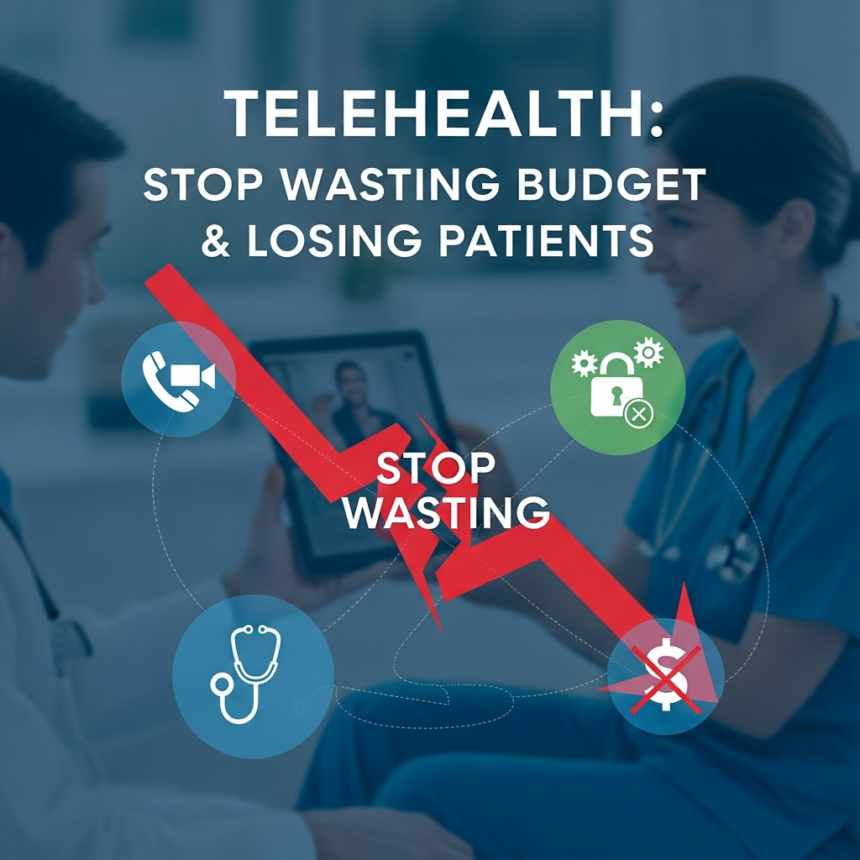
Telehealth no-shows are a financial drain. They also block patient care. Legacy reminder systems consistently fail to improve these rates, despite their promises. These systems treat symptoms, not underlying technical and operational issues, leading to wasted budget and persistent frustration.
You know what really hurts? Spending precious budget on a “new” reminder system, only to see your telehealth no-show rates barely budge. It’s a gut punch. Many organizations, especially in places like the US, Canada, and Australia, are stuck in this loop. They are throwing good money after bad.
Let’s be real. We are talking about a significant hit to your bottom line.
Every telehealth no-show isn’t just a missed appointment; it’s lost revenue and a wasted resource that could have served another patient.
— Dr. Alistair Finch, Digital Health Economist
The Diagnosis: Your “Reminder System” Isn’t Smart. It’s Just… There.
Why does this keep happening? Reminding patients more often is not the answer; it just creates noise. Your legacy systems are fundamentally flawed. They are built on outdated assumptions and do not understand your patients or your unique operational landscape.
Think about it.
In the US, patients grapple with complex insurance, co-pays, and often multiple providers. A generic SMS does not cut through that noise. They need context. They also need clarity on cost and covered services.
Up in Canada, long wait times are a reality. Patients might book multiple appointments, then just pick the first available. Your reminder needs to be smarter than that. It should gently nudge them to cancel others, not just confirm yours.
Down under in Australia, particularly in remote areas, internet access can be spotty. Time zones vary. A one-size-fits-all email simply will not work for everyone. Plus, culturally diverse populations may need specific communication approaches.
Here’s the kicker:
- Siloed Data: Your EHR, scheduling platform, and billing system probably do not talk. They are isolated islands. This means your “reminder” lacks crucial context about patient history or recent interactions.
- Static Communication: Most systems send generic messages, like “Your appointment is tomorrow at 2 PM.” That’s it. They offer no personalization or preferred channels. They also lack fallback options.
- No Feedback Loop: Did the patient open the message? Did they interact? Your system has no idea. It just fires and forgets.
- Ignoring Behavior: Some patients are habitually late. Others forget specific types of appointments. Legacy systems treat everyone the same. They miss vital predictive cues.
You know what this leads to? Frustration for your team. Significant financial losses. And, most importantly, patients not getting the care they need.
The Solution: Re-engineer the Patient Journey, Not Just the Reminder
So, how do you fix it? Stop thinking about “reminders.” Instead, start engineering a truly intelligent, empathetic patient engagement system. This isn’t an off-the-shelf product. It’s a strategic shift.
Here’s our 3-step fix:
- Build a Unified Patient Data Hub.
The Problem: Your data lives everywhere. Your EHR holds clinical history, scheduling has appointment times, and billing knows about payments. None of them truly inform your outreach.
The Fix: Integrate these disparate systems into a single, comprehensive patient profile. Use APIs to pull data from all relevant sources. This means linking your Cerner or Epic (US/CA) or your Best Practice (AU) directly to your communication engine.
The Benefit: Now, your system knows if a patient has a history of missed appointments. It knows their preferred language. It understands if they have had recent complex procedures. This is the foundation for *true* personalization.
Actionable: Audit your existing systems. Map out data flows. Identify integration points. This is where Sociazy excels in digital transformation.
2. Implement Dynamic, Personalized Engagement Workflows.
The Problem: Generic messages annoy patients. They do not account for individual needs.
The Fix: Leverage the unified data hub. Design dynamic workflows. Send a text reminder to a busy parent in Toronto, but offer a portal link for a detailed prep sheet to an elderly patient in Sydney. If a patient hasn’t confirmed after an SMS, try a quick, automated voice call.
The Benefit: Messages become highly relevant. They arrive on the right channel, at the right time, dramatically increasing engagement and reducing no-shows. This approach respects patient preferences and circumstances. For instance, patients facing mental health challenges might require gentler, more frequent nudges.
Actionable: Segment your patient population based on demographics, history, and communication preferences. Create flexible communication templates.
3. Integrate Predictive Analytics and Proactive Intervention.
The Problem: You react to no-shows. You do not prevent them.
The Fix: Deploy AI and machine learning models. Analyze historical data, patient demographics, and even external factors like weather or public holidays. Predict which appointments are at high risk of being missed. Then, *act* proactively.
The Benefit: Offer rescheduling options *before* a no-show occurs. Send a personalized “Are you still on for your appointment?” message to high-risk patients. Perhaps offer a slightly earlier slot to fill a potential gap. This transforms your operations from reactive to proactive, saving staff time and maximizing resource utilization.
Actionable: Start small. Identify 2-3 key predictors for no-shows in your data. Work with expert engineers to build a pilot predictive model. Gartner highlights the value of AI in healthcare efficiency. Source: Gartner
Moving Beyond Patchwork Solutions
This isn’t just about tweaking your current system. It’s about engineering a resilient, intelligent patient engagement platform. It’s an investment, yes. However, the ROI in reduced no-shows, improved patient outcomes, and streamlined operations is significant.
Forget those flimsy “reminder systems.” We are talking about enterprise-grade solutions that genuinely impact your business. We build the silent engineering force that makes brands like yours future-ready. This involves deep technical integration and a strategic approach, not just another SaaS subscription. Forbes agrees: proactive communication is key.