The freight industry runs on tight margins. Fuel costs and driver shortages are constant pressures. Yet, many companies ignore a massive cost center: legacy IT. On-premise servers are slow, expensive, and inflexible. They cannot handle the real-time data modern fleets need.
Cloud migration for freight is the solution. It unlocks new performance levels and cuts operational costs. This article reveals 7 ways cloud migration delivers immediate, measurable ROI.
1. Streamline Operations with Scalable Infrastructure
On-premise servers force you to play a guessing game. You either over-provision hardware and waste money. Or you under-provision and suffer performance issues. This is especially true during peak shipping seasons.
Cloud infrastructure is elastic. It scales up or down instantly based on demand. You only pay for the computing power you use. This “pay-as-you-go” model smooths out expenses. It ensures your systems always have the resources they need for optimal trucking performance optimization.
Learn more about Sociazy's Cloud Services page.
2. Enhance Real-Time Data Analytics and Visibility
Data is the new diesel. Your fleet generates massive amounts of it. Telematics, TMS data, and IoT sensors provide a constant stream. Legacy systems struggle to process this data in time.
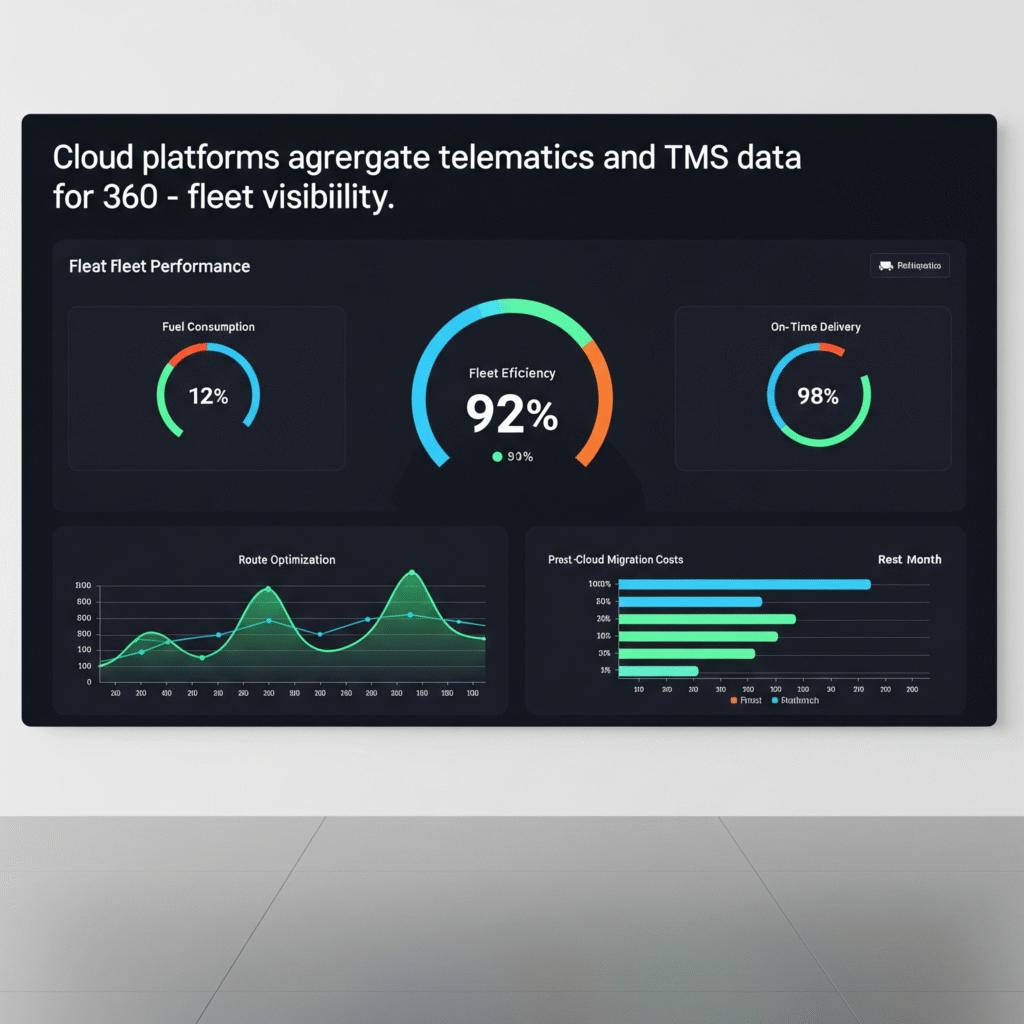
Cloud platforms are built for big data analytics. They can ingest and analyze millions of data points in real-time. This allows you to track KPIs, monitor driver behavior, and identify issues instantly. According to McKinsey, companies that leverage data-driven insights can improve logistics productivity by 15%.
3. Slash IT Infrastructure and Maintenance Costs
Think about the hidden costs of your server room. You pay for the hardware, software licenses, and physical security. You also pay for power, cooling, and the expert staff to maintain it all. These freight operational costs add up quickly.
Cloud migration shifts your spending from Capital Expenditure (CapEx) to Operational Expenditure (OpEx). You stop buying expensive servers every few years. Instead, you pay a predictable monthly fee. This frees up your IT team to focus on innovation, not just keeping the lights on.
4. Improve Cybersecurity and Data Compliance
The freight industry is a prime target for ransomware. A single breach can halt your entire fleet. Managing security for an on-premise network is complex and expensive.
Major cloud providers like AWS, Google Cloud, and Azure invest billions in security. Their platforms offer security controls that are far more advanced than what most companies can build themselves. This helps you protect sensitive cargo data and meet compliance standards.
For logistics leaders, security isn’t just an IT problem; it’s a business continuity problem. A single breach can halt your entire fleet. The cloud provides a centralized, expert-managed security posture that most in-house teams simply cannot match.”
— Sociazy Security Lead
5. Boost Fleet Agility and Route Optimization
In trucking, agility is profit. You must react instantly to weather, traffic, or last-minute customer changes. Old systems are too slow for dynamic rerouting.
Cloud-powered AI and machine learning models can process vast datasets instantly. This enables true, real-time route optimization. You can reduce fuel consumption, cut drive times, and improve on-time delivery rates. This is a core benefit of using logistics cloud solutions.
These systems are part of a larger push toward intelligent transport systems, which you can read about on the U.S. Department of Transportation website. Want to see how AI can help? Check out Sociazy's AI & Data Services.
6. Enable Superior TMS and Software Integration
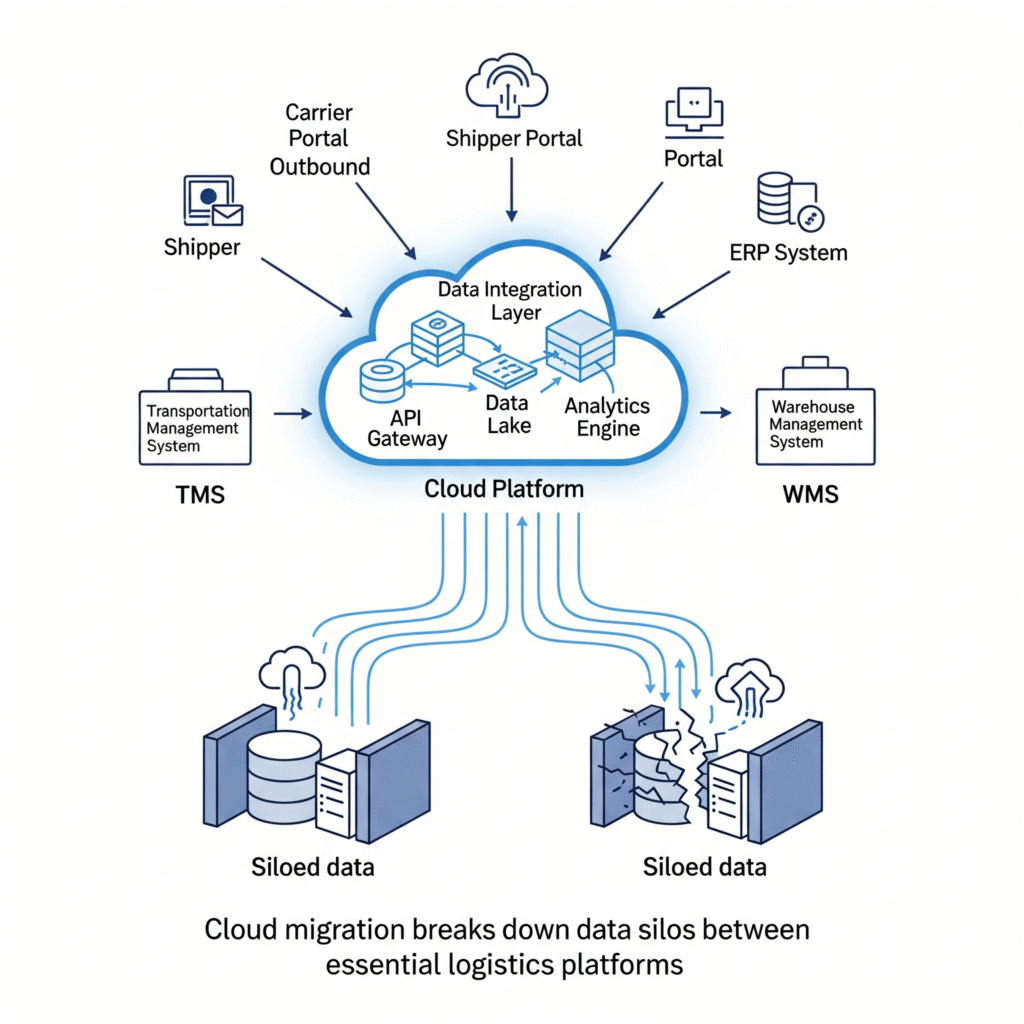
Many freight companies suffer from data silos. Your Transportation Management System (TMS) doesn’t talk to your warehouse (WMS). Your accounting software is separate from both. This leads to manual data entry and costly errors.
Cloud platforms are built on APIs. They make it easy to integrate all your critical software. A cloud-native TMS can connect seamlessly to your WMS, accounting, and even client portals.
Real-World Example: A national LTL carrier recently migrated its core TMS to the cloud. They achieved a 30% reduction in data entry errors. They also improved their on-time delivery rate by 12% by integrating their TMS directly with client-side WMS portals.
7. Accelerate Disaster Recovery and Ensure Uptime
What happens if your main office server fails? How long can your fleet operate blind? For most freight companies, downtime is catastrophic, costing thousands per hour.
Cloud migration for freight provides robust disaster recovery (DR). Your data is automatically backed up and replicated across multiple geographic locations. If one data center goes down, your systems failover to another one almost instantly. This ensures your trucking performance optimization strategy isn’t derailed by a single point of failure.
Protect your operations with Sociazy's Cybersecurity & DR page.
Conclusion
Moving to the cloud is no longer optional for freight and trucking companies. It is a fundamental strategic move for survival and growth. It’s the most effective way to cut long-term freight operational costs while simultaneously unlocking new performance.
Stop letting legacy IT hold your fleet hostage. Cloud migration is the key to gaining the agility, security, and data-driven insights you need to compete and win.
Ready to Transform Your Freight & Trucking Strategy?
Stop wondering and start transforming. Contact Sociazy’s expert team today for a no-obligation consultation on how we can solve your specific Freight & Trucking challenges.