Inventory distortion the costly gap between demand and supply is a staggering $1.8 trillion problem for logistics firms and their partners. Traditional forecasting methods are failing. Gut-feel and historical spreadsheets cannot handle modern market volatility. This guesswork leads to costly overstocking or value-destroying stockouts. This is where predictive analytics in logistics, built on a solid engineering foundation, transforms your operation from a reactive cost center into a predictive, strategic asset.
Why Traditional Forecasting Is a Broken Model
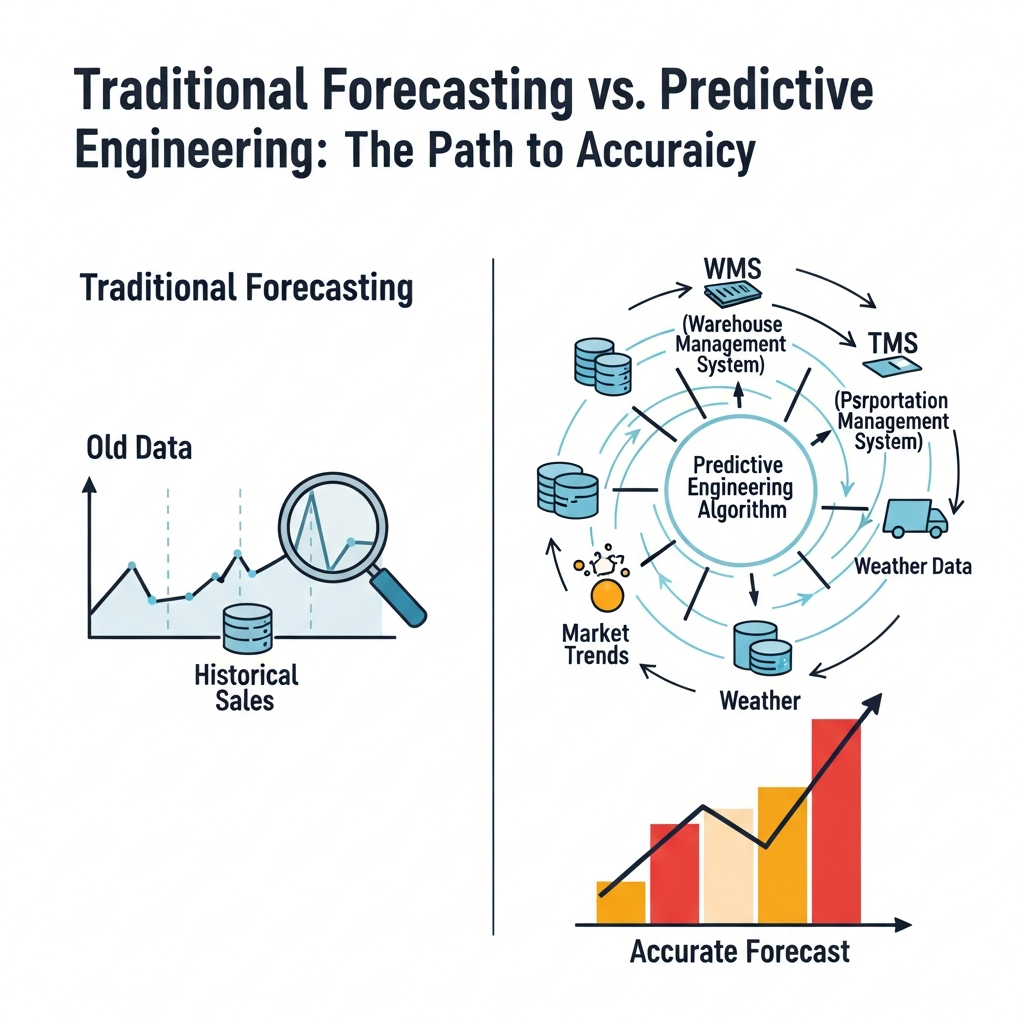
For decades, demand planning has been reactive. Forecasts are often built on last year’s sales data. This old model is fundamentally broken. It is incapable of processing the complex signals of today’s market.
This system’s failures are seen everywhere. Market trends, competitor actions, and even weather patterns are missed. Supply chain disruptions, like the “bullwhip effect,” are amplified. Consequently, capital is frozen in dead stock. Or worse, critical sales are lost because the right product is not in the right place. This is not a planning problem; it is an engineering problem.
What is “Predictive Engineering”? (It’s Not Just Analytics)
Many leaders confuse predictive analytics with a new dashboard. The truth is, a dashboard only shows you what happened. Predictive engineering builds the system that tells you what will happen next.
This capability is built on three core pillars:
- Robust Data Engineering: A solid foundation must be laid. This involves building automated data pipelines. Data from your TMS, WMS, ERP, and even external sources (like port schedules or public holidays) is ingested, cleaned, and centralized. Without this “single source of truth,” any AI model is useless.
- Machine Learning (ML) Models: This is the predictive engine. Custom ML models are trained to analyze patterns humans cannot see. They learn from your unique data, identifying signals that precede shifts in demand. This is how demand forecasting AI moves from a guess to a statistical probability.
- Strategic Integration: The forecast is useless if it stays in a report. The system must be engineered to feed insights back into your operational software. This can trigger automated reorder points in your WMS or adjust inventory levels in your ERP.
A 3-Step Framework for AI-Driven Forecasting
Building this capability is a methodical engineering process. It is not a one-time software purchase. A high-level framework is followed.
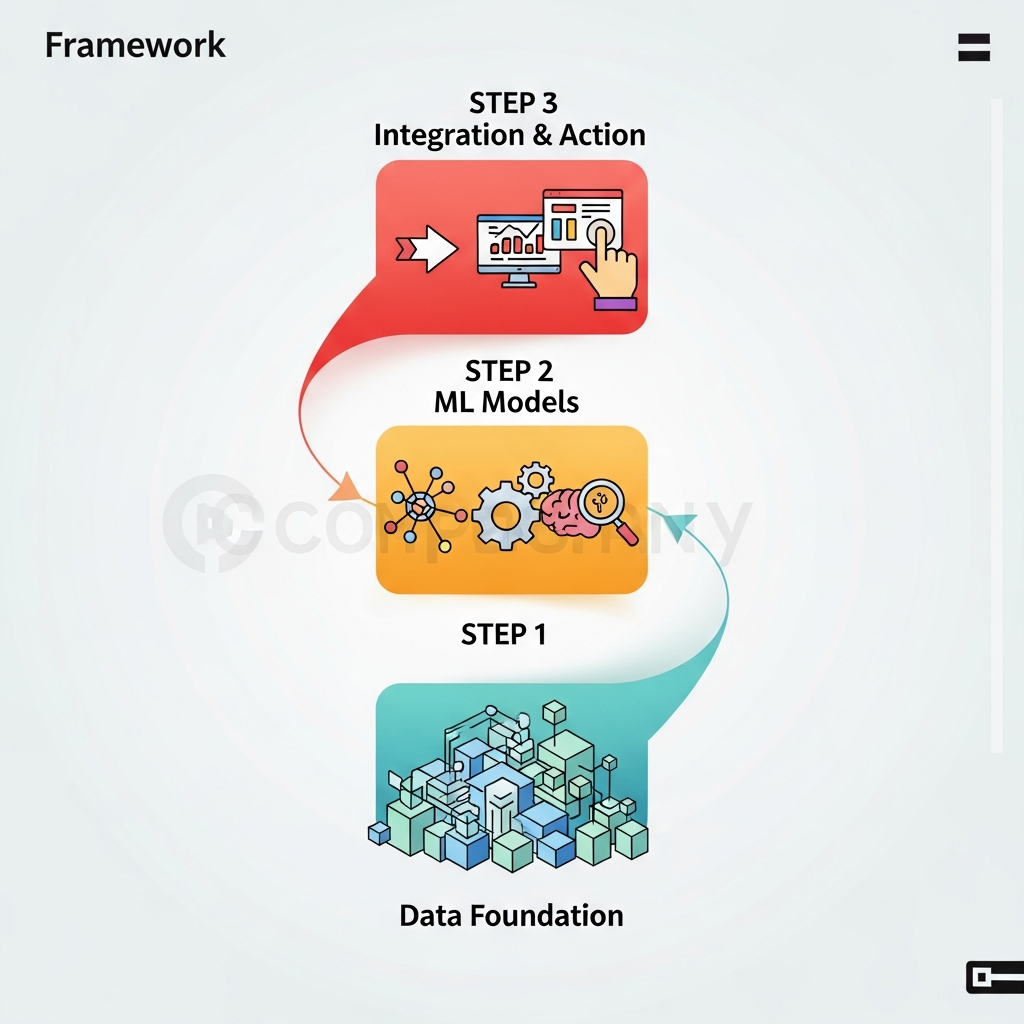
Step 1. Build the Data Foundation: The project is started by addressing data quality. Trustworthy, clean data is the priority. Our Sociazy’s Data Engineering services focus on creating this reliable data foundation before any AI model is built.
Step 2. Select and Train the Right Models: There is no “one-size-fits-all” algorithm. A model for fast-moving seasonal goods is different from one for slow-moving service parts. The models are selected and custom-trained on your specific business context.
Step 3. Integrate, Monitor, and Iterate: The system is integrated with your core operations. But it is not “set and forget.” Sociazy’s AI & ML solutions are designed for MLOps (Machine Learning Operations). The models are monitored and automatically retrained as new data arrives, ensuring the forecast gets smarter over time.
Logistics leaders are no longer asking if AI can help; they are asking how to build the data infrastructure to support it. A predictive model is only as good as the data pipeline that feeds it. Get the engineering right first.”
— Sociazy
Real-World Case: Slashing Overstock for a 3PL Client
This framework was applied for a mid-sized 3PL partner. They were struggling with over 30% overstock on seasonal goods. Their Excel-based forecasts consistently missed demand spikes and troughs.
The Solution: A unified data pipeline was engineered by our team. It integrated their WMS with carrier data and regional holiday schedules. A custom ML model was deployed to generate a 90-day rolling forecast for their top 500 SKUs.
The Result: This system provided a forecast accuracy of over 92%. Inventory holding costs were reduced by 22% in the first six months. More importantly, stockout incidents during their peak season were cut by 15%, protecting their key customer relationships.
The True ROI: Beyond Simple Cost-Cutting
Solving inventory distortion with predictive analytics in logistics does more than just cut waste. The true business value is found in three areas:
- Capital Efficiency: Cash is no longer trapped in warehouse racks. It is freed up for investment in growth, technology, and talent.
- Enhanced Customer Satisfaction: The right products are always in stock. This reliability is a massive competitive advantage, building loyalty and reducing churn.
- Strategic Agility: You can finally trust your numbers. This confidence allows you to make bold decisions, like expanding into new markets or launching new product lines, backed by data.
Conclusion: Your Golden Takeaway
Stop participating in the $1.8 trillion guessing game. The chronic problem of inventory distortion is solvable, but it is not an “analytics” problem—it is an engineering one.
The golden takeaway is this: Do not buy another dashboard. Instead, invest in building a true predictive capability. It starts with a clean, centralized, and trustworthy data foundation. By engineering a system that learns and adapts, your logistics operation is transformed from a reactive cost center into a predictive, agile, and highly profitable asset.
Stop Guessing. Start Predicting.
Is inventory guesswork and “dead stock” draining your profits? Your data holds the answer. Let’s build the engineering platform that finds it.